Don’t Ruin Premium Fabric:
When you invest in high-grade unstitched fabric—whether it’s pure Boski silk, fine Egyptian cotton, or a crisp blended suiting—the material is only half of the equation. The remaining half depends entirely on how it is handled, cut, and stitched by your tailor.
Even the most luxurious fabric can look average if a tailor uses the wrong interlining, skips pre-shrinking, or irons with excessive heat.
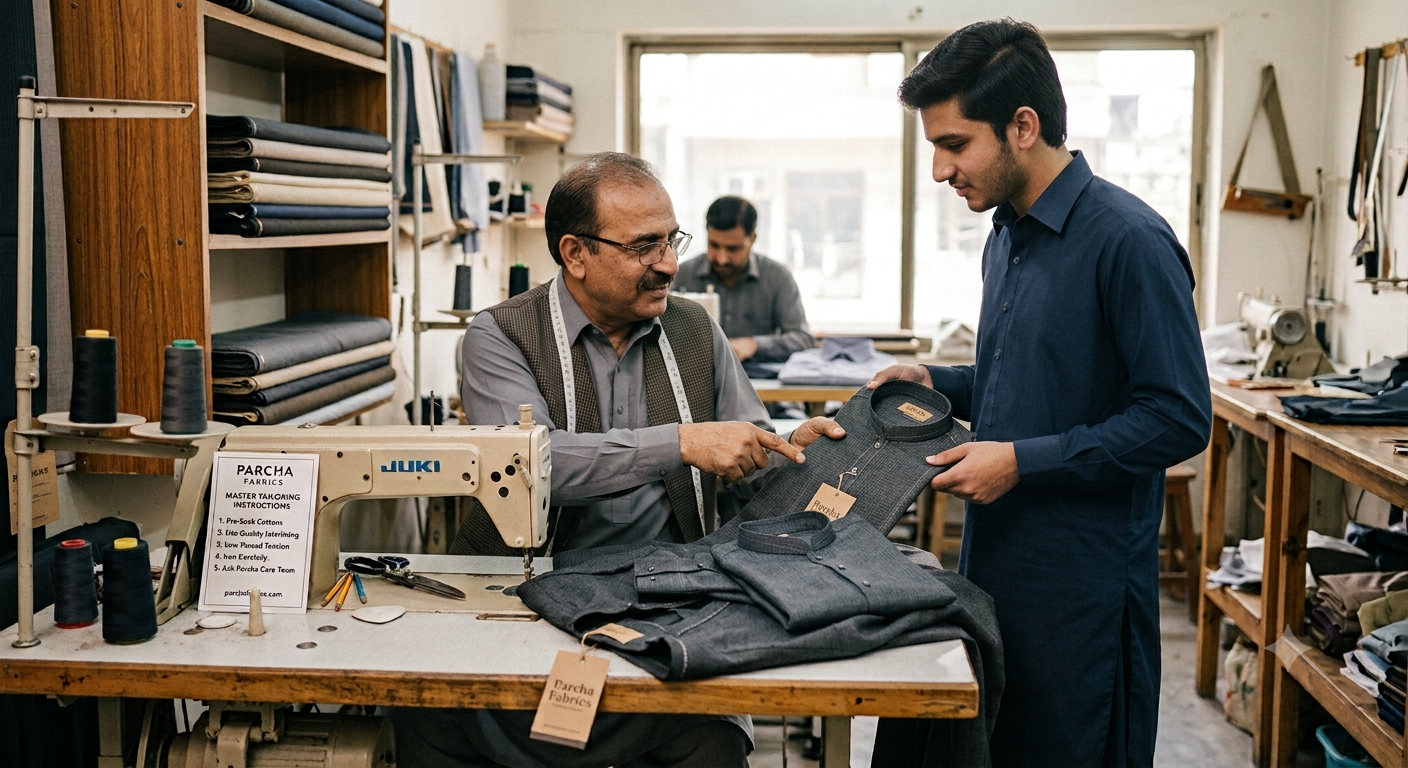
To help you get a custom, high-end fit every single time, we created the Parcha Fabrics Master Tailoring Guide. Here are the four essential rules you—and your tailor—need to follow before making that first cut.
1. Never Skip Proper Pre-Shrinking (For Cottons & Blends)
Natural cotton fibers naturally react to water. If you hand unstitched cotton straight to your tailor without pre-soaking, your completed Shalwar Kameez may shrink after its very first home wash—leaving you with tight shoulders and shortened hemline lengths.
- The Rule: Always soak cotton and blended fabrics in clean, room-temperature water for 30 to 45 minutes before delivering them to your tailor.
- The Exception: Never soak Pure Boski Silk. Silk requires low-heat steam pressing or professional dry cleaning only.
2. Match the Collar Interlining (Bukram) to the Occasion
The structure of your collar and cuffs defines the entire tone of your outfit. Tailors often default to whatever canvas (bukram) they have on hand, but you should always specify what you need based on where you plan to wear the suit:
- For Formal & Festive Wear: Request high-density, hard fused bukram. This gives the collar a sharp, executive hold that pairs perfectly with waistcoats and formal shoes.
- For Daily Wear & Office Routines: Request medium-weight or soft interlining. This provides a clean silhouette while keeping the collar comfortable around your neck all day.
3. Prevent Puckered Seams with Correct Thread Tension
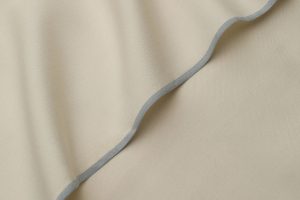
Have you ever noticed small, wavy wrinkles running down the side seams of a new suit? That is called seam puckering, and it happens when a tailor uses excessive needle tension on lightweight or smooth fabrics.
When dropping off your suit, remind your tailor to adjust their machine’s thread tension to suit the specific weight of the fabric. Lightweight silks and high-count cottons require low tension and fine needles to achieve smooth, flat seams.
4. Protect Natural Fibers During Pressing
High heat can permanently damage premium textile fibers. Pure Boski silk can develop unsightly shine marks if ironed directly with a hot surface, while delicate synthetic blends can singe or melt under unmonitored heat.
Always instruct your tailor (and laundry service) to use a damp pressing cloth when ironing silk, and to keep the iron set strictly to medium or silk/wool temperature settings.
Download Our Free Master Tailor Care Card
At Parcha Fabrics, we want every suit you order to look like a bespoke masterpiece. That is why we now include our official Master Tailoring Instruction Card inside every box we ship.
You can hand this card directly to your tailor along with your unstitched fabric so they have clear, step-by-step technical specifications for cutting, fusing, and finishing your garment.
👉 Explore Our Latest Unstitched Collections at parchafabrics.com